
Clipbook
The first in-house designer at the B2B tech startup, spanning product, research, brand, and the operations behind them.
.png)
Clipbook is where I learned how much a single designer can hold. I owned the brand foundation, ad-hoc marketing needs, the product operations, the enterprise research, the design and launch of shipped features, and ultimately a full redesign of the webapp. The features I designed were adopted by clients representing $1.4M in new ARR, while behind the scenes I rebuilt how the company turned feedback into roadmap and migrated the team to Linear. It was a role with no edges, and it taught me to design systems rather than just screens.
The startup's product function, staffed by one designer
New Flow: Analytics Data Visualization to Deep Dive to Journalist Contact Info
Pain point solved: Moving from an analytical finding to a journalist's contact meant context-switching out of the analytics view entirely. The data and the action had no connection.
Every feature here followed the same arc:scoped from client research and sales conversations, designed and tested through iteration, then delivered in live demos to the enterprise accounts using the product. Seven features shipped in total; four are shown below.
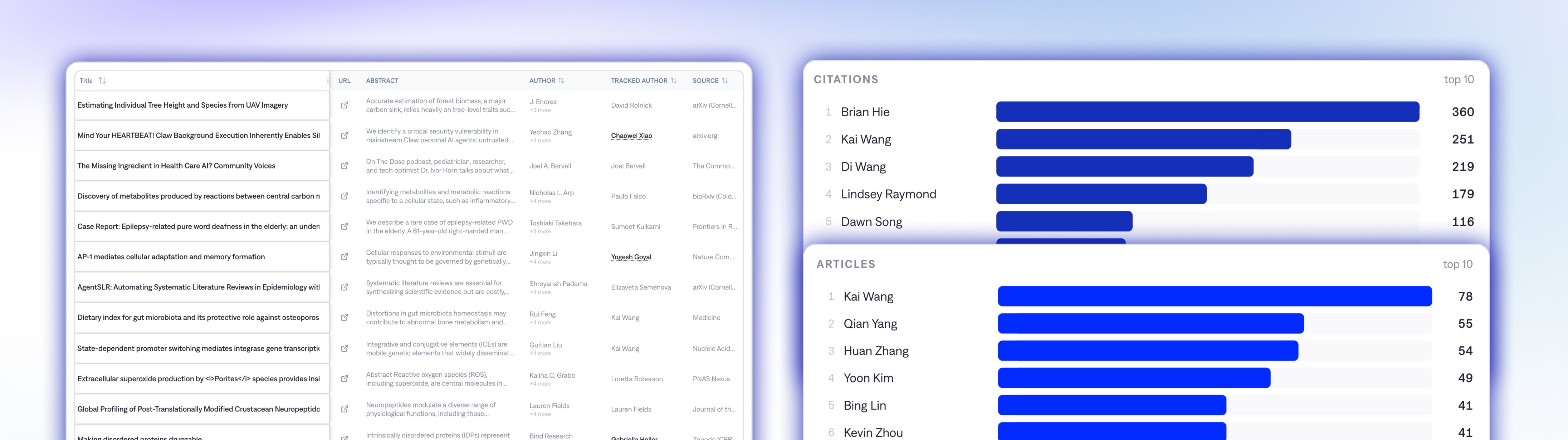
Data Source & WebApp Page: Scholarly Articles
Pain point solved: Academic and institutional coverage didn't register in any monitoring platform in the industry. For research-adjacent & innovation-focused clients, that was a meaningful blind spot that became a Clipbook-unique feature.
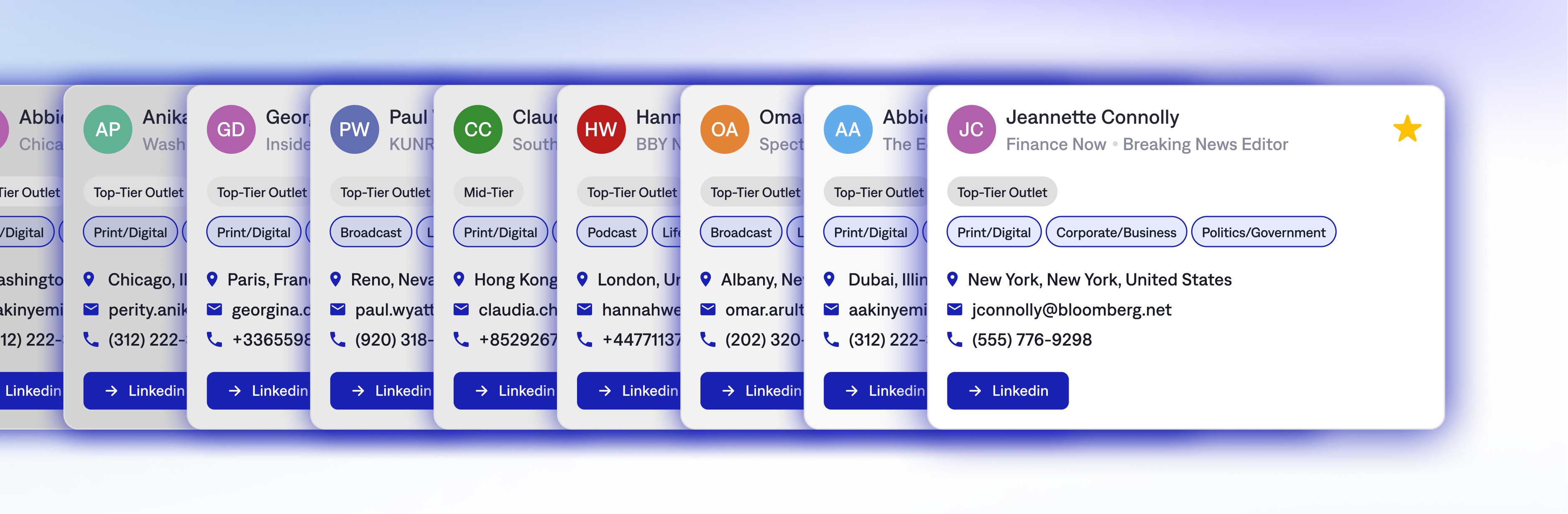
Data Source & WebApp Page: Outreach Database
Pain point solved: Finding the right journalist to pitch required leaving Clipbook. The research tool and the action lived in completely separate workflows.
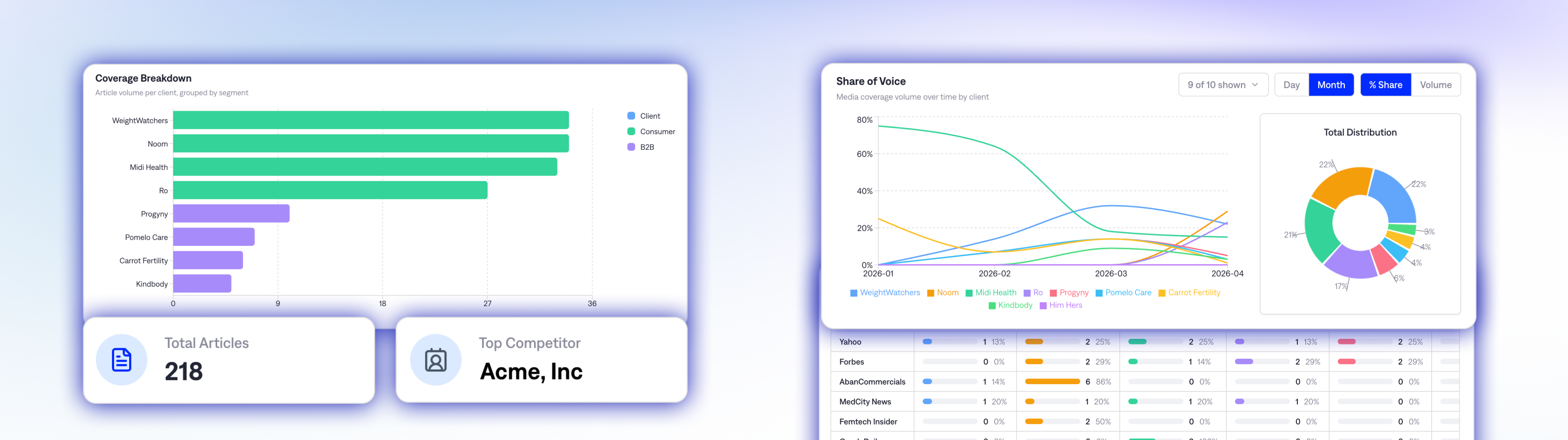
WebApp Page: Competitive Intelligence
Pain point solved: Competitive data lived inside the platform but required manual reconfiguration to access. This page made it a first-class view; persistent, filter-free, and built with visualizations the general analytics page didn't have.
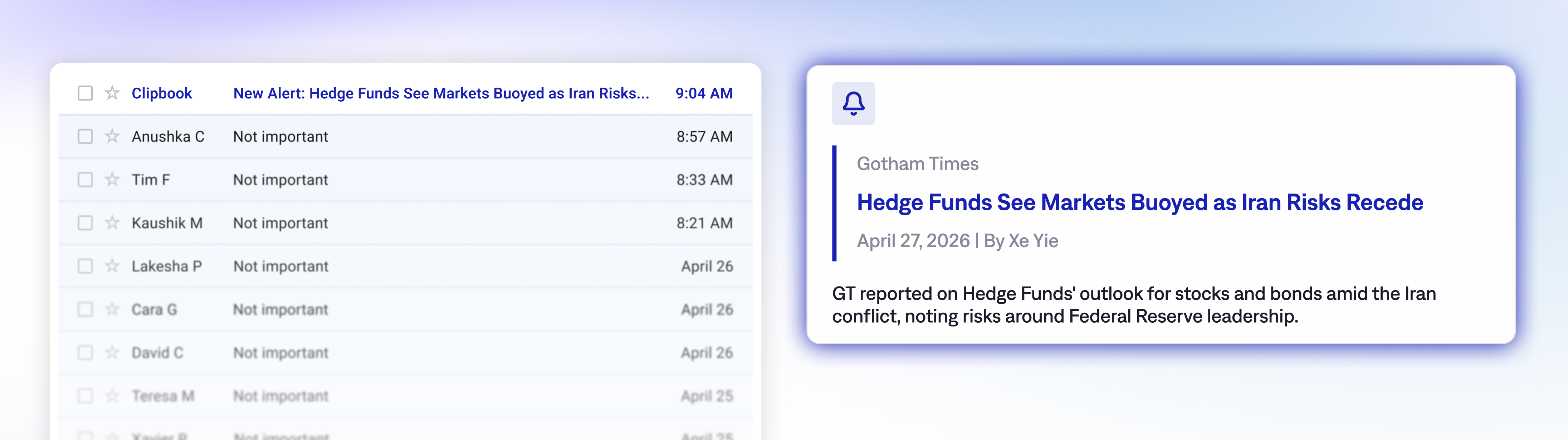
New Delivery Option & WebApp Page: Real-Time Alerts
Pain point solved: PR on offense requires knowing first. Enterprise clients were consistently finding out about a story's spread in the following day's report.
The research phase was about building a shared mental model of the product's users. I identified distinct personas within PR and comms teams, diagrammed their core workflows, and mapped the decision points where Clipbook either fit naturally or created friction. This gave the team a framework for evaluating what to build and in what order.
Before I joined Clipbook, there was no established UX Research operation.
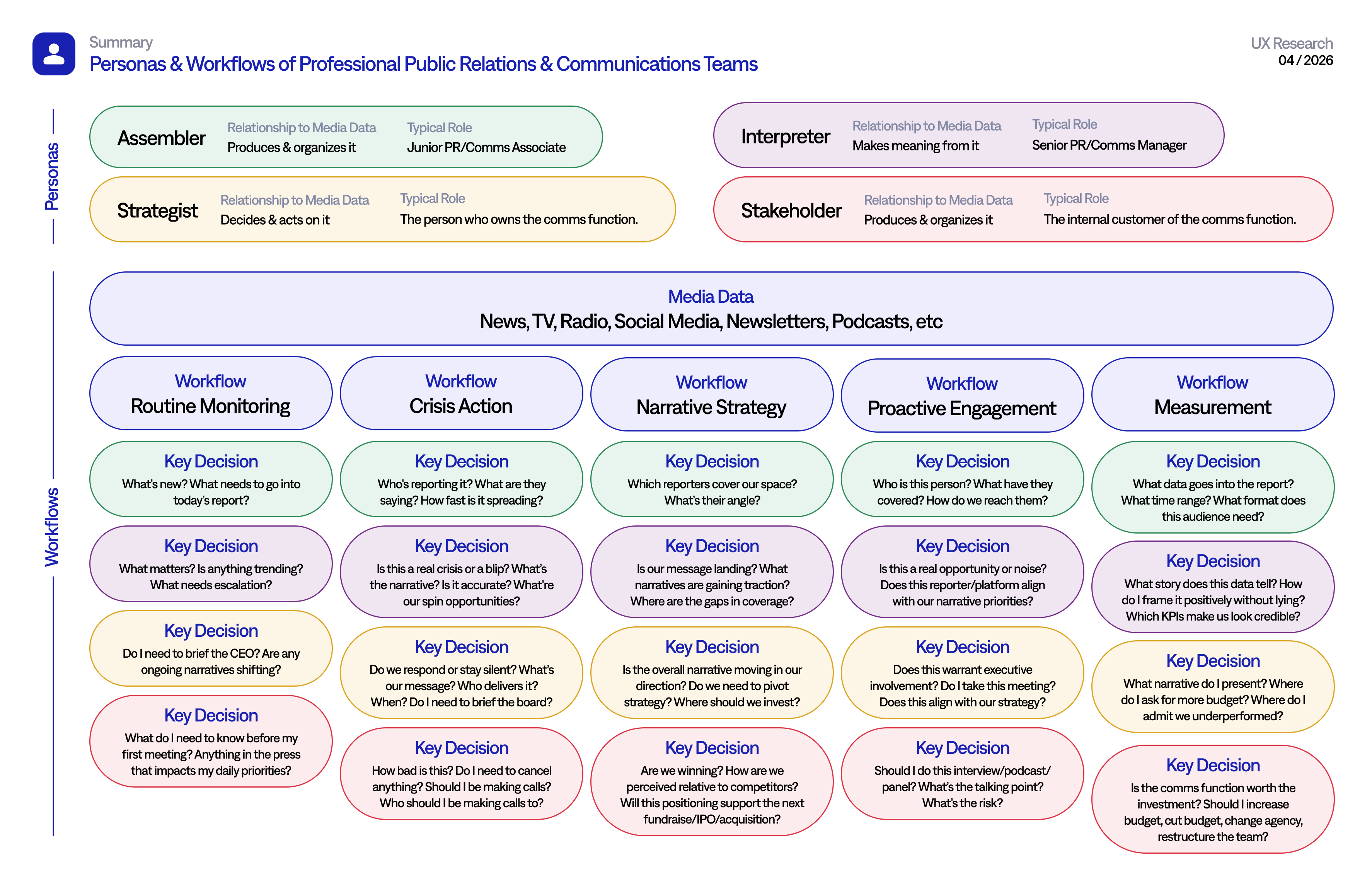
UX Research Learnings Summary
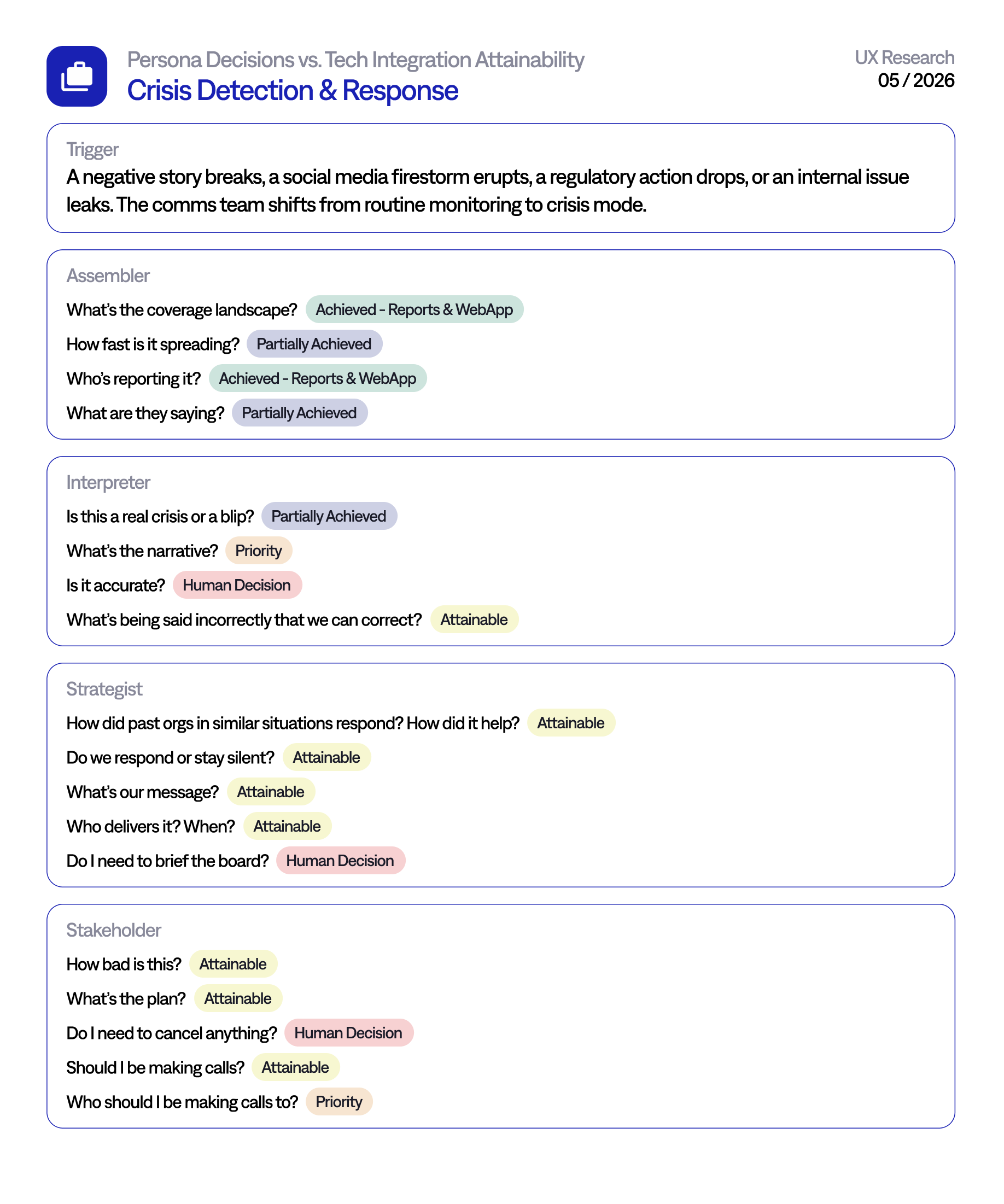
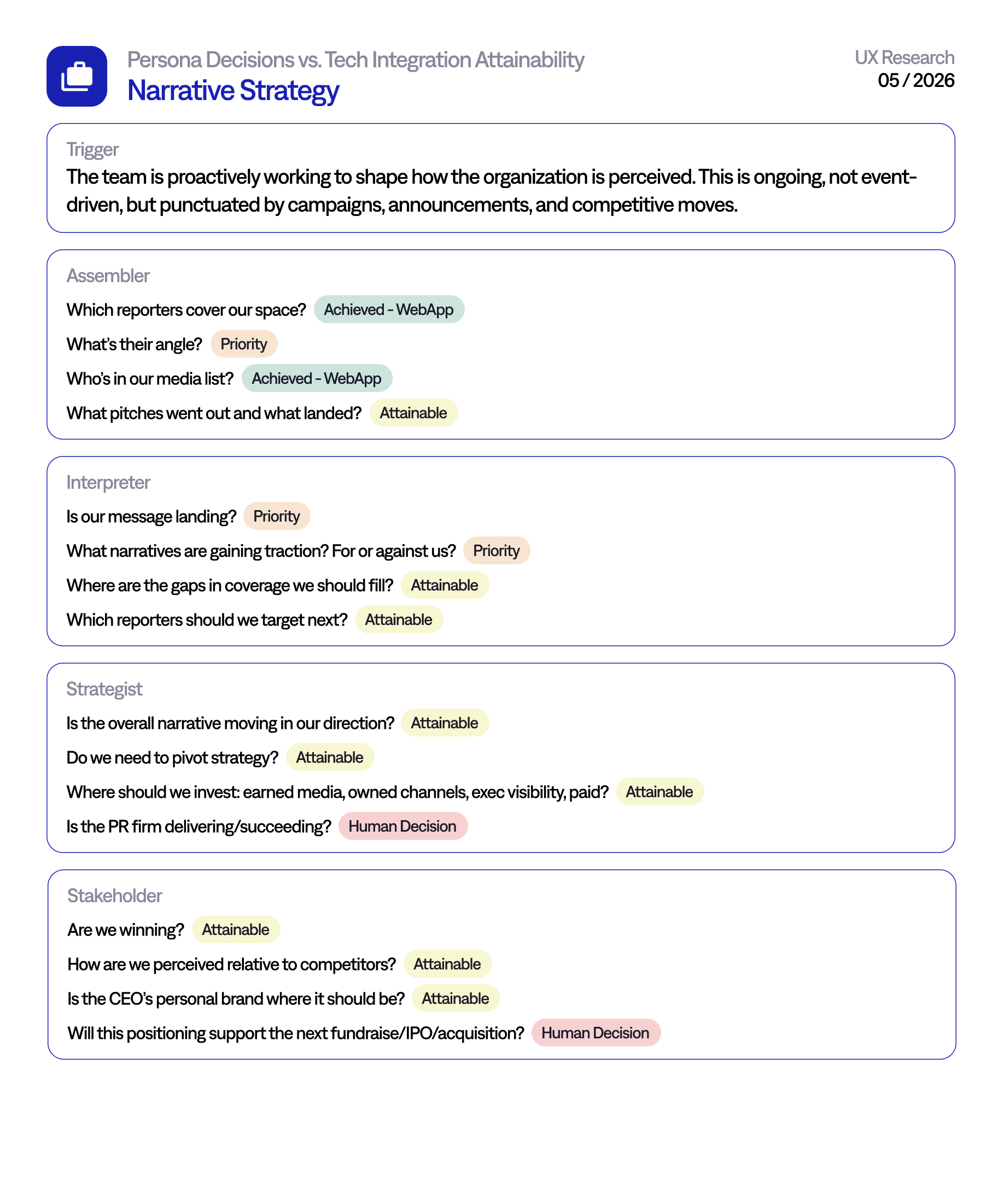
Workflow-specific tech integration attainability analyses.
Product operations was invisible until it was broken. I built the infrastructure to make feedback actionable: a structured intake-to-roadmap pipeline, a company-wide Linear migration, and a documentation system that made institutional knowledge queryable rather than buried.
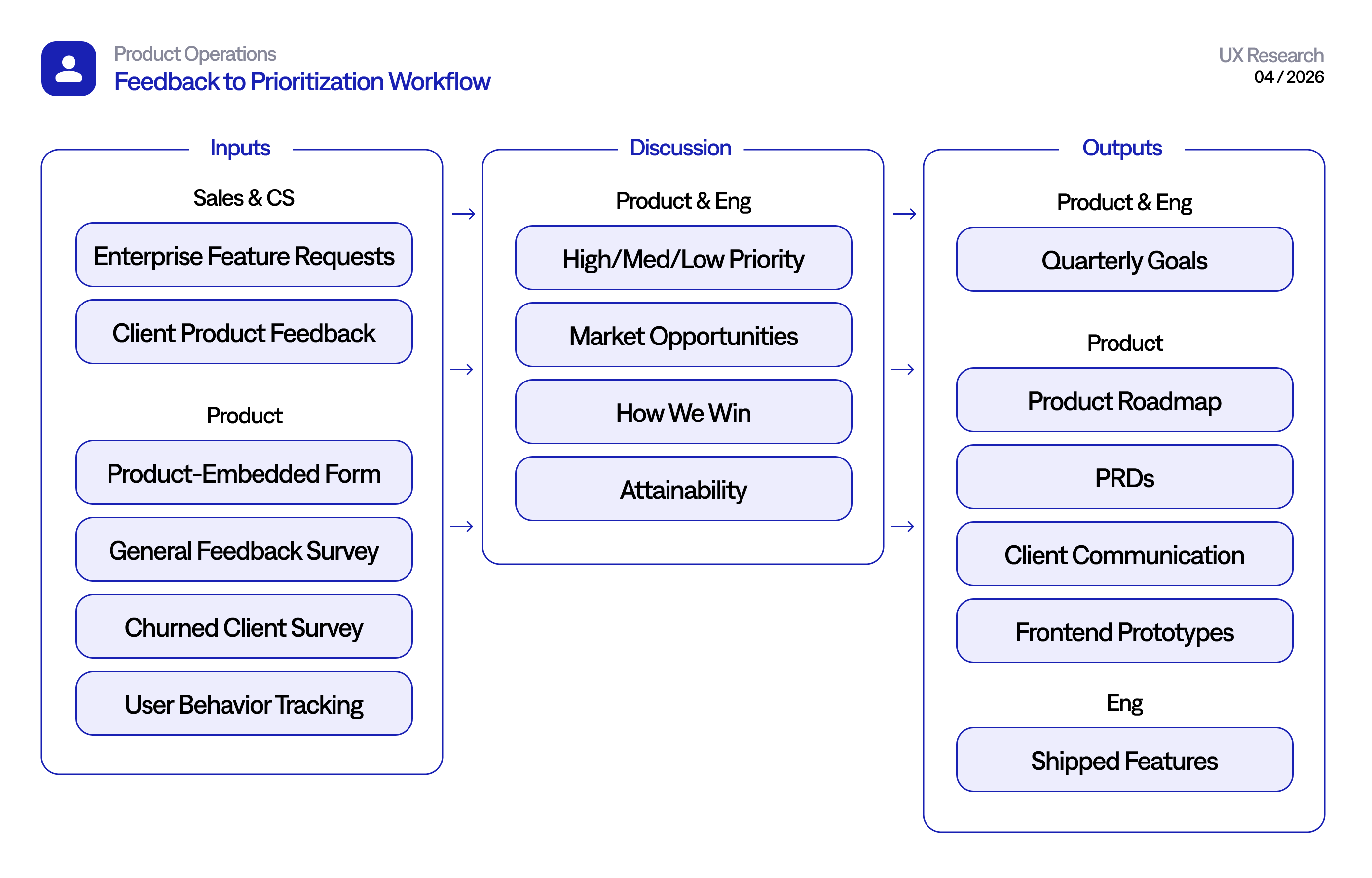
My function (Product) within the product development cycle.
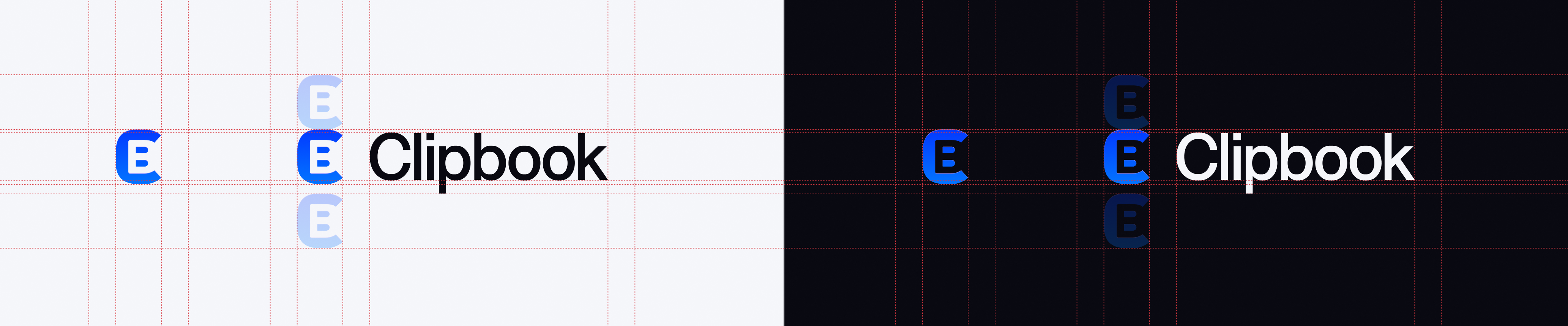
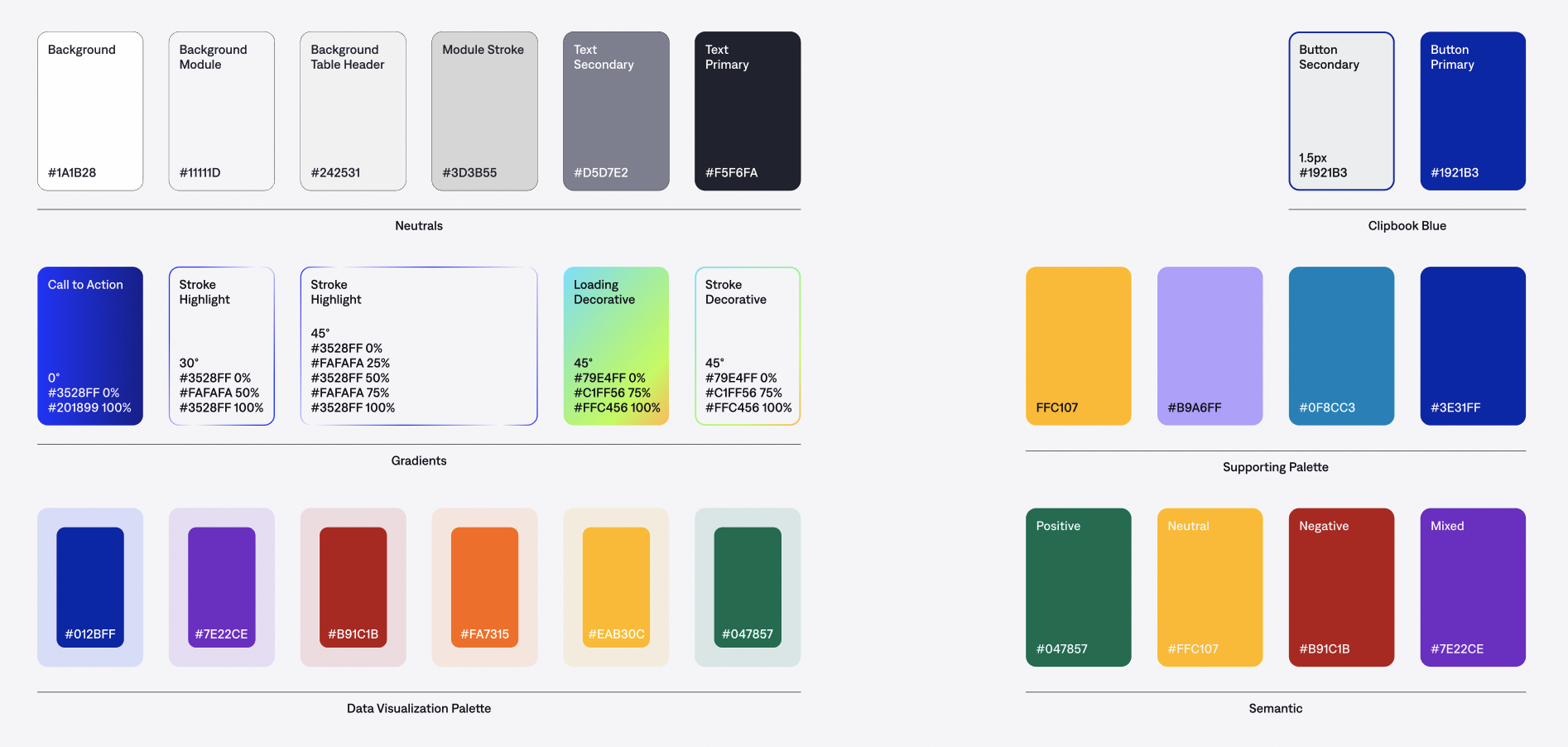
When I arrived, the brand existed in scattered shared drives, unspoken conventions, and minutely-differing logo files. As the first in-house designer, creating a brand foundation was table stakes. I formalized it through guidelines and a visual system grounding everything the company used from then on.


Clipbook's product had outgrown its design. I led a full rebuild: 16 user flows, a component library, and interactive prototypes developed with Claude Code and FIgma.
The full vision for the rebuild allowed us to retire an internal, bloated legacy system by consolidating its most vital functionality into three "operations" pages. For external users, we introduce a proper landing page to display the breadth of Clipbook's daily media intake, a personalized and persistent chatbot, and an elevated experience interacting with subscription-specific intelligence.
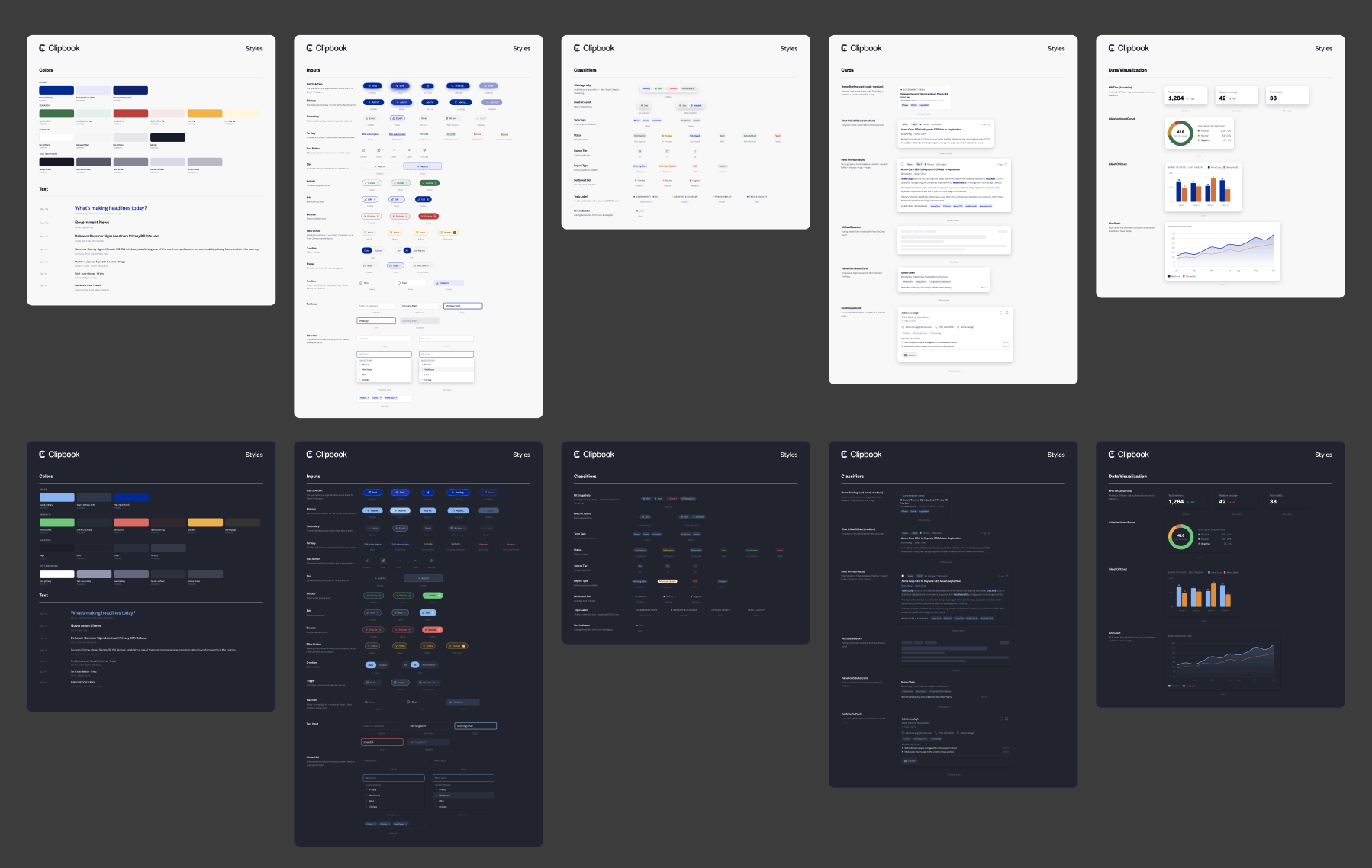
Component Library
New Flow: Feed to Syndications Database to Alert Delivery
Pain point solved: The platform didn't allow for users to send alerts ad-hoc to the established distribution list. This new feature allows for manual delivery at-will, providing teams the agency to deliver intelligence outside the confines of the automated, predetermined configurations.
New Flow: Media Hit Ingestion to AI Query to Report Generation
Pain point solved: The platform pushed intelligence out. It didn't respond to it. There was no way to ask a question, get a quick answer, or generate a report outside the daily cycle.
The features I designed were adopted by clients representing $1.4M in new ARR. One feature convinced an enterprise client to cancel their PR firm entirely.
Beyond the product itself, I left behind a redesigned webapp, a design system, a research foundation, operational infrastructure, and a documented brand foundation: the things that make a company's design function sustainable rather than reactive.
Lorem ipsum dolor sit amet, consectetur adipiscing elit. Suspendisse varius enim in eros elementum tristique. Duis cursus, mi quis viverra ornare, eros dolor interdum nulla, ut commodo diam libero vitae erat. Aenean faucibus nibh et justo cursus id rutrum lorem imperdiet. Nunc ut sem vitae risus tristique posuere.

